Blog

Why Critical Thinking Matters in High School
Your teenager is going to hear a lot of bad arguments over the next four years.
Some will come from TikTok. Some from friends. Some from college professors. Others may sound convincing because they appeal to fear, anger, belonging, or the desire to fit in.
For parents choosing a high school, the concern underneath the course list is simple: Will my child learn to recognize what is true?
I do not want our students to graduate simply knowing what we told them to believe. I want them to know how to think. Critical thinking in high school should teach students to recognize truth, test arguments, communicate clearly, and make sound decisions.
This article answers why those skills matter and how Royalmont develops them within the formation of the whole person.
Critical Thinking in High School Starts with Truth
Critical thinking is sometimes treated as if it means questioning everything until nothing can be known. That is not how we understand it.
We believe truth exists. Therefore, students should learn how to seek it honestly, recognize it carefully, and respond to it with humility.
That requires more than memorizing the correct answer. Students need to examine evidence, uncover assumptions, distinguish emotion from reason, and notice when an argument does not support its conclusion.
They also need the courage to change their minds when the evidence demands it. Intellectual formation is not about teaching a student to win every argument. It is about forming a person who loves the truth more than being right.
What Students Are Doing Right Now at Royalmont
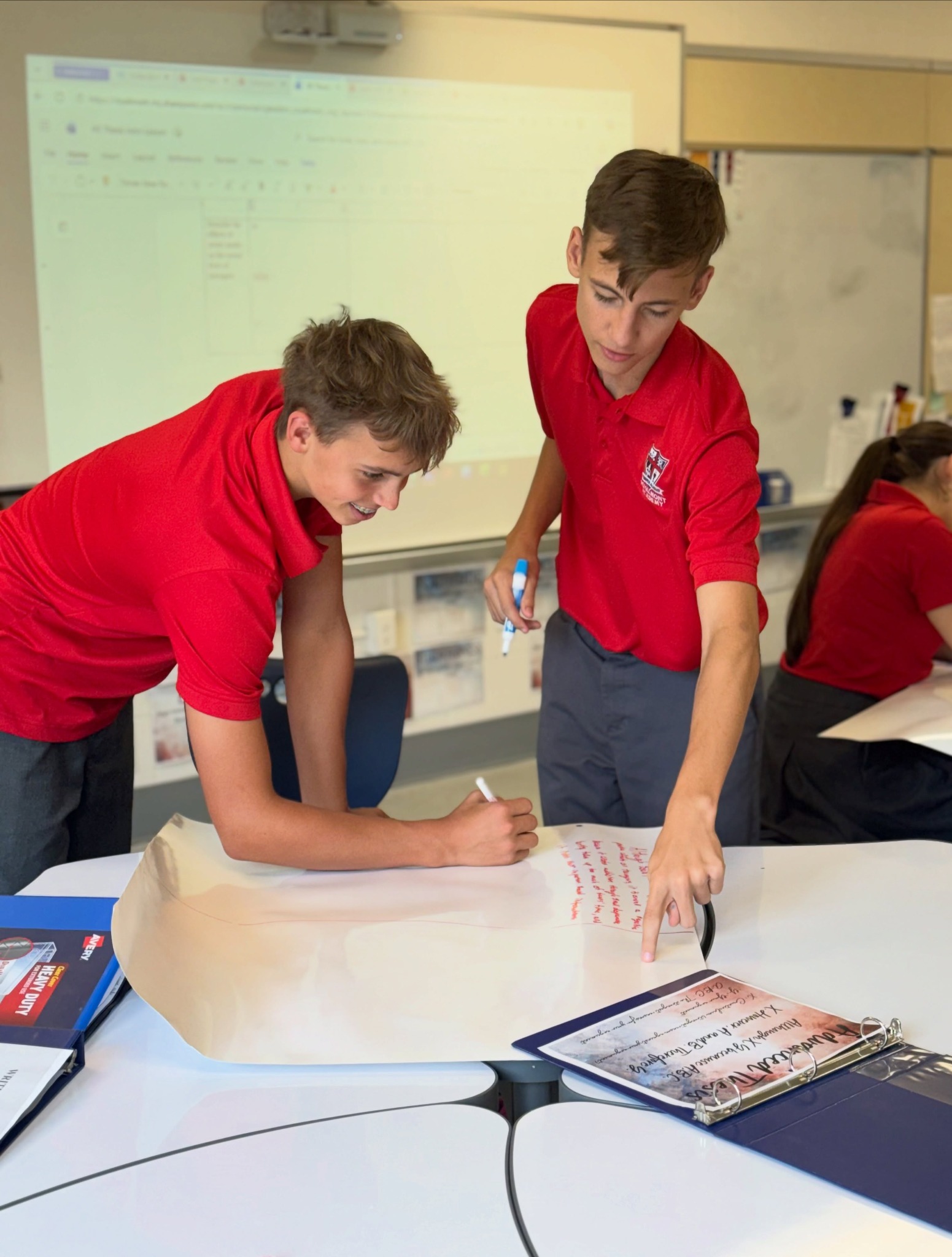
In a recent high school lesson, students identified ad hominem, tu quoque, and genetic fallacies. Those names matter because bad arguments rarely introduce themselves as bad arguments.
Instead, a weak claim may attack the person making an argument. It may dismiss an idea because of its source. It may avoid a criticism by pointing out that someone else does the same thing.
Once students can name those moves, they can slow down and examine what is actually being said.
In Rhetoric, students also work with ethos, pathos, and logos. They learn how credibility, emotion, and reason shape communication. More importantly, they learn that persuasion carries moral responsibility.
Logic can become a weapon if a student only learns how to expose another person’s mistakes. Christian formation asks for something harder: Can you defend what is true without humiliating the person in front of you?
Our students apply that question to the Catholic faith as well. They study what the Church teaches, why it teaches it, and how to explain those beliefs with clarity and charity.
Critical Thinking Requires More Than a Logic Class
A Logic course helps, but one course cannot form a habit of mind.
In Latin, students build discipline through daily vocabulary, grammar, rereading, and translation. Some are translating the Gospel of Mark verse by verse. That work teaches patience, precision, and respect for what a text actually says.
In Economics, students receive flexibility in pace and format. However, that freedom comes with responsibility. They must monitor their progress, manage deadlines, and communicate when they need help.
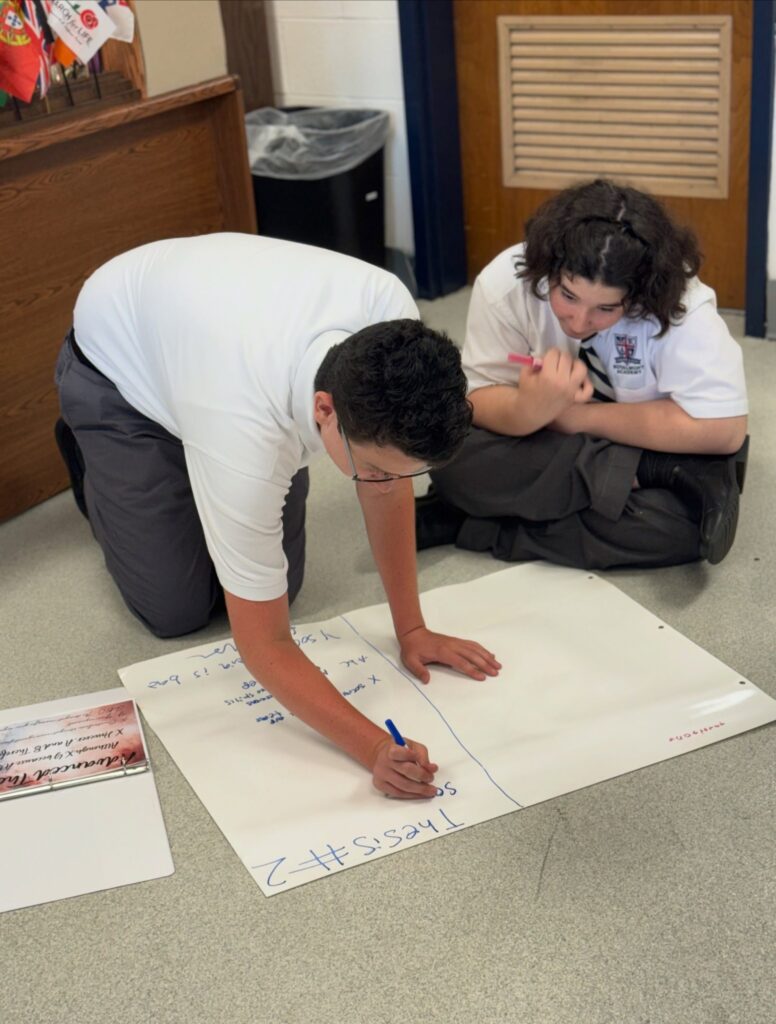
Group work adds another layer. Students must listen, explain an idea, test a proposal, and revise their thinking when a classmate sees something they missed.
These experiences connect intellectual formation with human formation. Students are not only learning content. They are developing discipline, ownership, judgment, communication, and the humility to learn from someone else.
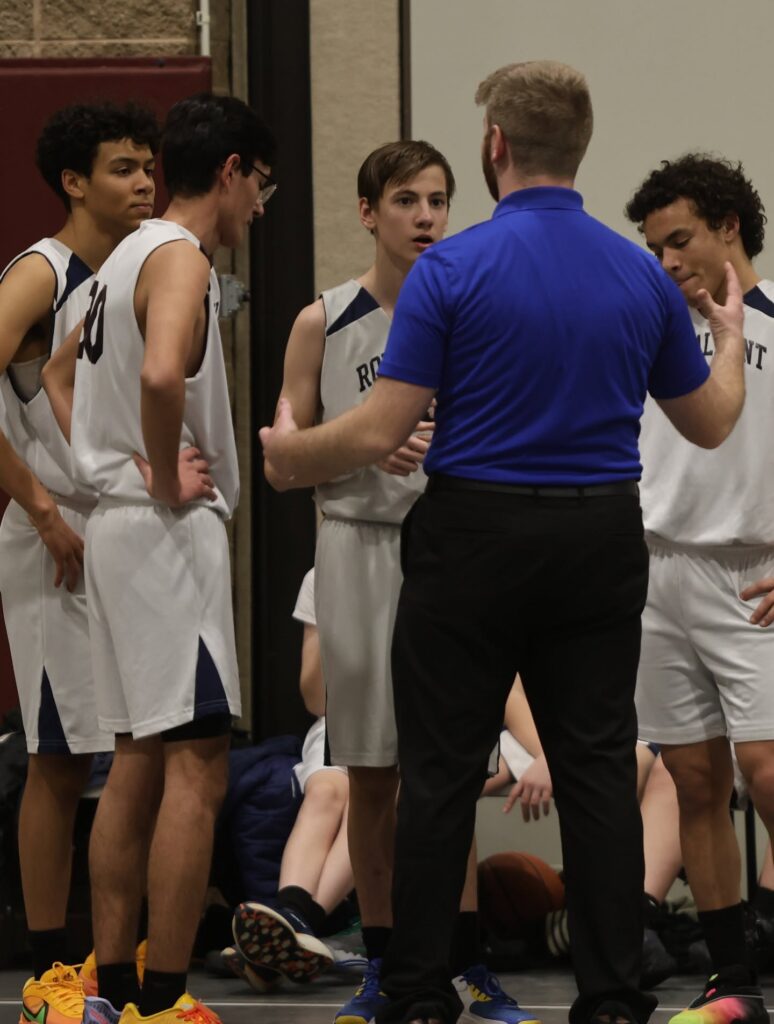
How Critical Thinking Becomes Christian Leadership
Leadership without sound judgment can cause tremendous damage. Confidence is not enough. A leader must know how to examine a problem, seek counsel, weigh competing goods, and make a prudent decision.
That is why this article follows our post on high school leadership opportunities that build leaders. Before students can lead others well, they must learn to govern their own thinking.
Our mission is to form strong Christian leaders who will transform society. The word Christian changes the goal.
We are not forming students merely to argue more forcefully, gain influence, or advance themselves. We want them to use reason in service of truth and their gifts in service of others.
That is Integral Formation in practice. Intellectual, human, spiritual, and apostolic growth belong together because the student is one person.
Why Choose Royalmont Over Other Strong Options?
A classical school may teach Logic and Rhetoric exceptionally well. A public school may offer excellent academics and broad opportunities. A large Catholic high school may provide strong theology courses. Homeschooling can give families tremendous control and flexibility.
Those are real strengths.
Royalmont’s distinction is the integration. Logic is not isolated from Theology. Rhetoric is not reduced to winning an argument. Faith is not confined to Religion class. Reason, virtue, responsibility, communication, and Catholic truth develop together.
Our smaller high school also allows teachers and formators to know the student doing the thinking. One child may need the courage to speak. Another may need the humility to listen. A third may need an adult to challenge an easy assumption.
Personal accompaniment lets us respond to the person, not simply deliver the lesson.
If you are deciding between Royalmont and another Catholic, classical, public, or homeschool option, ask what happens after a student gives the right answer. Will anyone know whether your child understands it, can defend it, and has the character to live it?
What Should Parents Look for in a High School?
When you visit a school, do not only ask whether Logic appears in the course catalog. Ask to see how students think in ordinary classrooms.
- Do students explain why an answer is correct?
- Can they disagree without attacking one another?
- Do teachers connect knowledge to virtue and responsibility?
- Are students known well enough to receive personal challenge?
- Can students explain their faith rather than only repeat it?
You can explore the Royalmont Academy High School program before your visit.
Then come during a normal school day. Meet our students. Listen to the questions they ask, watch how they work together, and decide whether this is the kind of thinking you want shaping your child’s next four years.
Common Questions Parents Ask
Why is critical thinking important in high school?
Critical thinking helps teenagers evaluate claims, recognize weak arguments, communicate clearly, and make responsible decisions. These skills prepare students for college, work, relationships, civic life, and mature faith.
How does Royalmont teach critical thinking?
Royalmont teaches critical thinking through Logic, Rhetoric, Latin, Theology, Economics, discussion, collaborative work, and personal feedback. Students practice reasoning across subjects rather than limiting it to one course.
How does Catholic faith support critical thinking?
Catholic education holds that faith and reason work together in the search for truth. Students learn what the Church teaches, examine why it teaches it, and communicate those beliefs with clarity and charity.
Does critical thinking mean students should question everything?
No. Critical thinking does not require permanent skepticism. It teaches students to examine evidence, identify assumptions, test conclusions, and respond honestly when they encounter truth.
Is Royalmont Academy a classical Catholic school?
Royalmont Academy offers a classically infused Catholic education grounded in the Catholic Intellectual Tradition and Regnum Christi formation. The curriculum integrates modern pedagogy while remaining faithful to Church teaching.
Discover the Royalmont Academy Difference
Imagine a school where students are known, formed, and prepared to lead — not just for college, but for life. At Royalmont Academy, we nurture academic excellence, leadership, and faith at every stage, from preschool through high school. Request information, schedule a visit, or begin your journey with us today.