
Blog

Choosing a High School? 7 Questions Every Parent Should Ask About Preparing for Life
The right high school should do more than prepare your child for graduation. It should prepare them for life.
When choosing a high school, parents naturally consider academics, athletics, extracurricular activities, and college opportunities. Students, meanwhile, often focus on friendships, activities, and whether they’ll enjoy their high school experience.
All of those things matter. However, there’s another question worth asking: What kind of person will my child become during these next four years?
Will they develop confidence, learn to solve problems, and take responsibility? Will they discover their strengths, build meaningful relationships, and learn to lead? More importantly, will they leave high school prepared for whatever path they choose?
That path might include college, skilled trades, entrepreneurship, military service, or entering the workforce. Some students will explore several of these possibilities before discovering their calling.
At Royalmont Academy, we believe a great education prepares students for more than one destination. Our mission is to form strong Christian leaders who will transform society, wherever God calls them.
As you explore high schools in Greater Cincinnati, here are seven questions every family should consider.
1. Will My Child Be Known, Challenged, and Supported?
Every student is different. Some excel academically but struggle with confidence. Others have natural leadership abilities yet need help developing discipline and perseverance. Still others haven’t discovered their interests or strengths.
Unfortunately, an impressive curriculum means little if a student struggles to find the guidance needed to succeed.
That’s why personal attention matters. However, smaller class sizes alone don’t guarantee it. What matters is how teachers understand each student’s needs and use that knowledge to help them grow.
At Royalmont, we call this individual accompaniment. Our faculty work to understand each student’s strengths, challenges, interests, and potential. Through those relationships, we help students develop both competence and confidence.
Royalmont junior Samuel Agnew explains:
“My teachers understand the times when I need help and when it’s better to allow me to struggle with something.”
That’s an important distinction. Good teachers don’t simply provide answers or eliminate every difficulty. Instead, they help students become capable of overcoming challenges themselves.
Senior Anna Brink offers another perspective:
“You aren’t just another number in a crowd. Your strengths and weaknesses are known, along with what you’re capable of doing.”
Ultimately, individual accompaniment should help students become more independent, not more dependent on adults.
Ask when visiting: How will the school get to know my child personally, and how will that relationship influence their growth?
2. Will My Child Have Opportunities to Belong, Participate, and Lead?
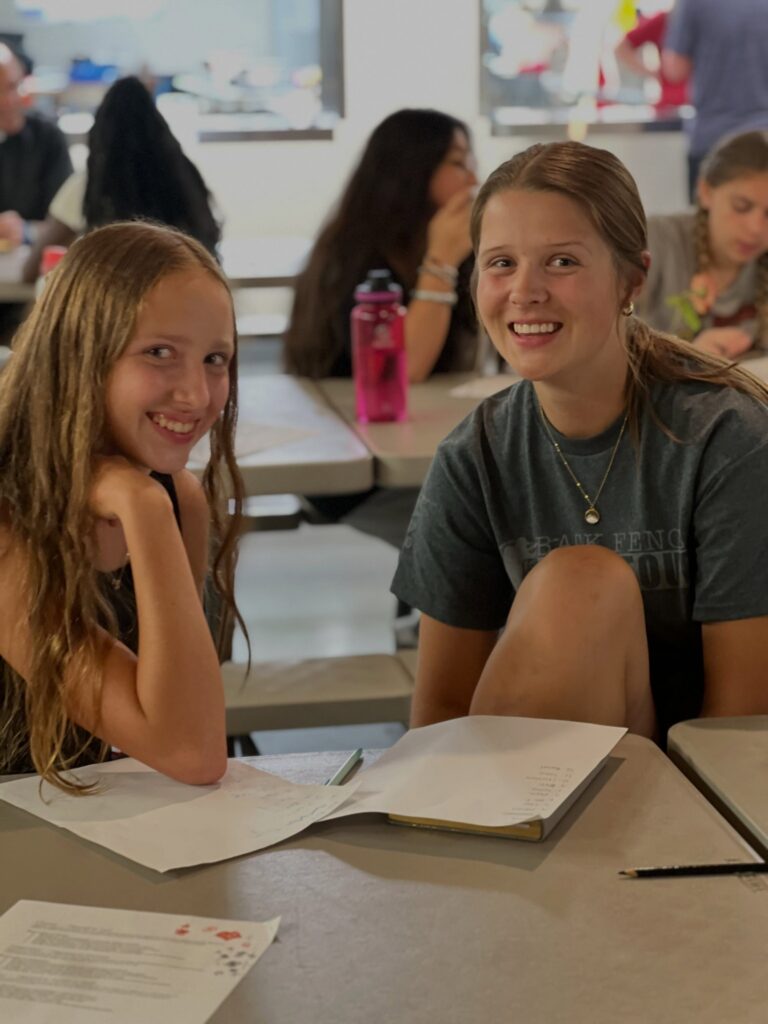 One of the biggest concerns students have about high school is whether they’ll fit in.
Will they make friends? Have opportunities to participate? Find activities they enjoy? Feel like they belong?
School size often enters this conversation. Larger schools may offer more teams, clubs, and social opportunities. That’s a legitimate consideration. However, families should also ask how easily students can become involved and make meaningful contributions.
At Royalmont, students participate in athletics, House Challenges, retreats, service activities, and leadership opportunities. They also build relationships across grade levels through experiences such as our eighth-grade and senior buddy program.
Junior Rachel Nieport shares one example:
“As a proud member of the Judith House, I help plan and participate in house challenges designed for the whole high school to have fun.”
Notice that Rachel doesn’t simply attend the activities. She helps plan them.
That distinction reflects an important part of our approach. We want students to experience the joy of high school while learning to take ownership of their community.
Senior Anna Brink describes another meaningful responsibility:
“Having my buddy has helped me realize that we are the young adults in this school who are responsible for being good role models.”
For Anna, mentoring a younger student became an opportunity to recognize her influence and responsibility.
These experiences also help students build friendships and confidence. Most importantly, they give students opportunities to contribute rather than simply participate.
Ask when visiting: Will my child have opportunities to build friendships, explore interests, and take an active role in the school community?
3. Does the School Prepare Students for Different Futures, Not Just One Path?
Here’s a question that deserves more attention in conversations about high school education: What happens if your child doesn’t follow the path everyone expects?
Some students will pursue four-year college degrees. Others may enter skilled trades, start businesses, join the military, pursue apprenticeships, or begin careers directly after graduation.
Furthermore, many young adults will change direction more than once throughout their lives.
A strong education should prepare students to navigate those choices rather than assume everyone will follow the same route.
That means developing skills that matter across different professions and life experiences. Communication, critical thinking, problem-solving, responsibility, teamwork, and initiative don’t belong to one career field.
For example, an entrepreneur must communicate ideas and manage risk. A skilled tradesperson needs technical knowledge, judgment, and problem-solving skills. Military service demands discipline, teamwork, and leadership. Likewise, success in college requires independence, perseverance, and the ability to manage competing responsibilities.
At Royalmont, we want students to discover their gifts while developing the capabilities to pursue their own futures.
Our current academic opportunities include Advanced Placement, College Credit Plus, and dual-enrollment courses. Faculty members also work with students to explore individual academic pathways.
For example, Royalmont student Madison Crandall Coffey is pursuing a college-credit pathway with the goal of earning an associate degree while completing high school.
Her experience demonstrates the value of pursuing an ambitious individual goal with guidance and flexibility.
At the same time, we’re exploring additional opportunities in skilled trades, entrepreneurship, career exploration, and other practical pathways as Royalmont High School continues to develop.
Our goal isn’t to direct every student toward the same destination. Instead, we want each student to discover their strengths, explore opportunities, and develop the character and skills to pursue a meaningful future.
Ask when visiting: How will the school prepare my child for different educational, career, and service pathways?
4. Will My Child Develop Skills That Matter Beyond the Classroom?
Think about the skills adults use every day.
We communicate with coworkers, solve unexpected problems, manage responsibilities, collaborate with others, and make decisions with incomplete information.
Yet students don’t develop these abilities simply by memorizing information and passing tests.
They need opportunities to practice.
At Royalmont, academic challenge works alongside personal development. Teachers encourage students to ask questions, think critically, work through difficulties, and explain their ideas.
Samuel Agnew describes this approach:
“In class, I have to think critically and create my own ideas outside of what the textbook says.”
Students also develop practical interpersonal skills through collaborative projects and student activities.
Junior Sarmad Ahsan reflects on his own growth:
“Doing all these projects helped me learn teamwork and communication skills.”
These are skills that students can carry into virtually any environment.
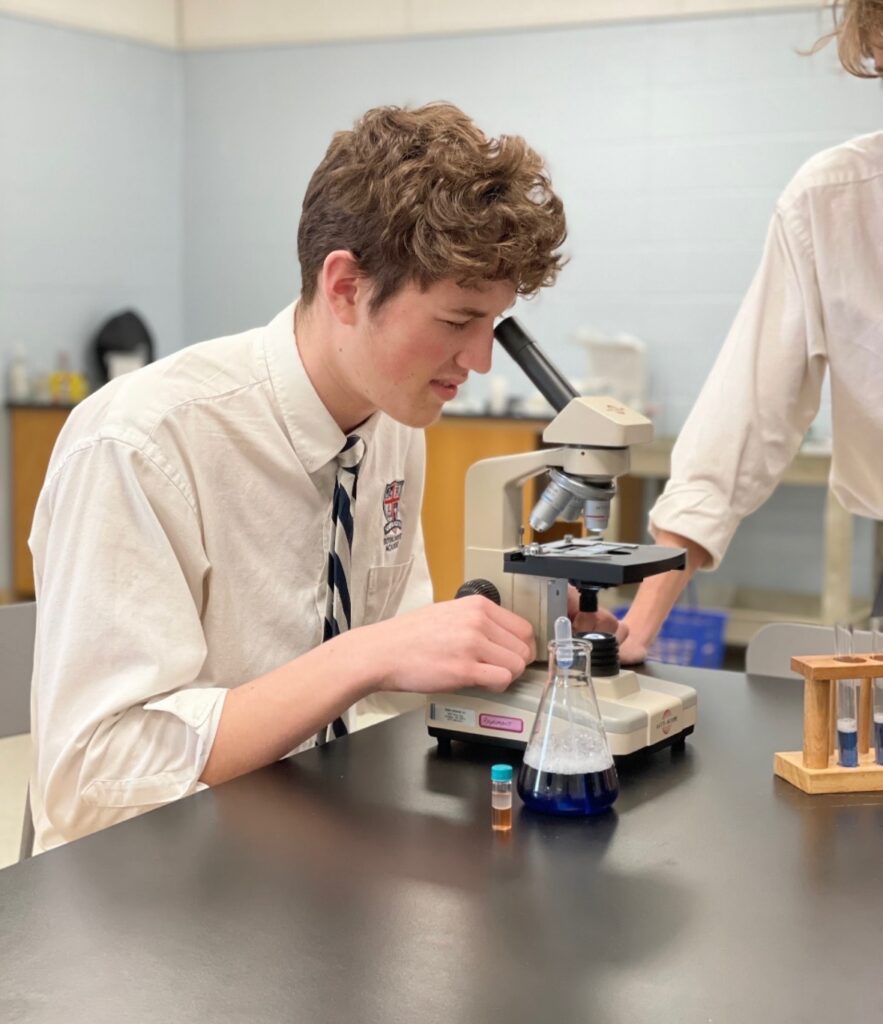
Additionally, challenging science labs, class discussions, presentations, and opportunities for independent work help students develop confidence in applying what they learn.
Education should certainly develop academic knowledge. However, students also need to know how to use that knowledge when the answers aren’t obvious.
Ask when visiting: What opportunities will my child have to practice communication, teamwork, problem-solving, and independent thinking?
5. Will My Child Learn to Take Initiative and Accept Responsibility?
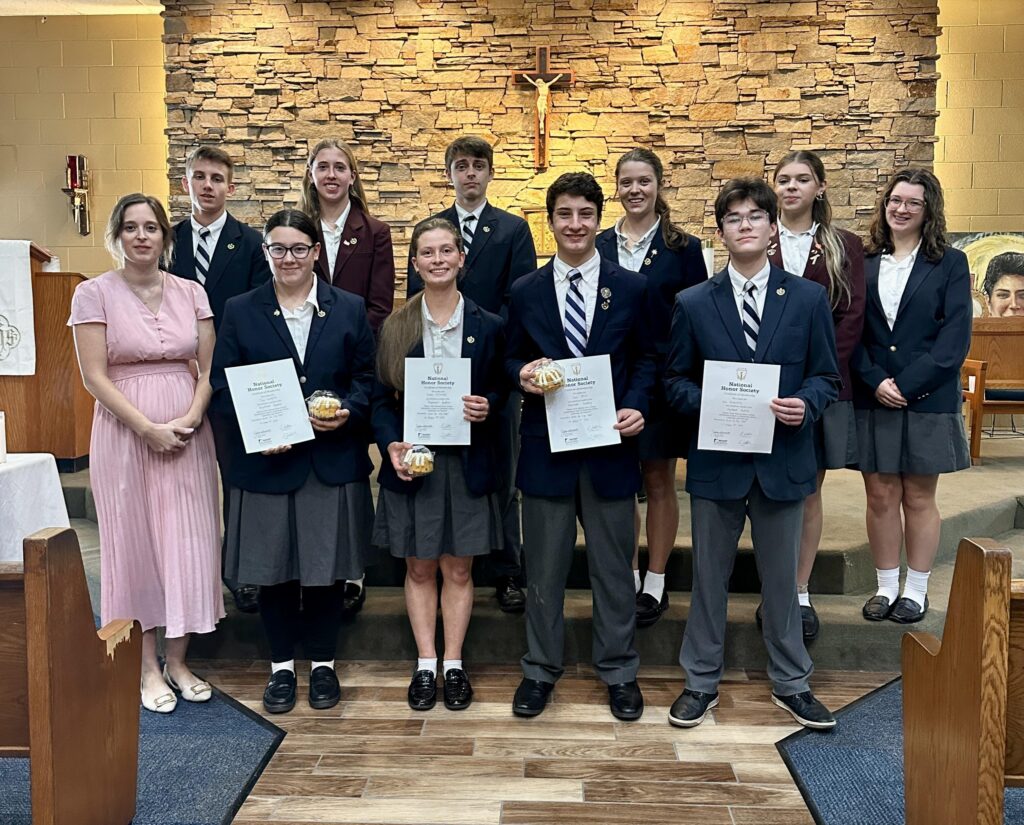 Leadership isn’t simply holding an office, becoming a team captain, or being the loudest person in the room.
It begins when students learn to take responsibility for themselves and others.
Sometimes leadership means organizing an activity. Other times, it means helping someone who needs encouragement, speaking up when something is wrong, or following through on a commitment.
At Royalmont, forming strong Christian leaders is central to our mission.
We want students to practice leadership rather than simply learn about it. As a result, we look for opportunities to entrust them with meaningful responsibilities.
Students help organize House activities, mentor younger children, participate in retreats, and serve their school community.
Junior Ann Marie Davis describes how her experience has changed over time:
“In three years, I have seen myself become comfortable with leadership.”
She also explains that Royalmont has given her opportunities to lead younger students at Mass and mentor other students.
These experiences help students discover that leadership isn’t reserved for a select few.
Instead, it involves developing the courage, judgment, humility, and responsibility to make a difference wherever they find themselves.
Whether a graduate eventually manages a business, leads a military unit, works on a construction team, or raises a family, those abilities will matter.
Ask when visiting: How does the school intentionally develop leadership, and what real responsibilities will my child have?
6. Will My Child Develop Character, Perseverance, and a Strong Moral Foundation?
 Every parent wants their child to succeed. However, life won’t always unfold according to plan.
Our children will experience setbacks, disappointment, difficult relationships, and unexpected challenges. Therefore, a good education must help them develop the perseverance and judgment to navigate those moments.
At Royalmont, our Catholic identity informs how we approach the formation of the whole person.
Through Integral Formation, we seek to develop students intellectually, humanly, spiritually, and apostolically.
These dimensions work together. Academic achievement matters, but so do integrity, self-discipline, humility, compassion, and a willingness to serve others.
For example, senior Bella Polly reflects on overcoming difficulties during her time at Royalmont:
“With the help of my teachers and administrators, I was able to push past the struggle and keep moving forward.”
That’s the kind of growth that can influence a young person’s entire life.
Likewise, students learn that faith isn’t limited to theology classes or school Masses. Our Catholic faith calls us to recognize the dignity of others, act with integrity, seek truth, and use our gifts in service.
Ultimately, we want our students to develop an internal compass that helps them make good decisions even when no one is watching.
Ask when visiting: How does the school help students grow through difficulties, develop good judgment, and put their faith and values into practice?
7. Who Will My Child Become After Four Years Here?
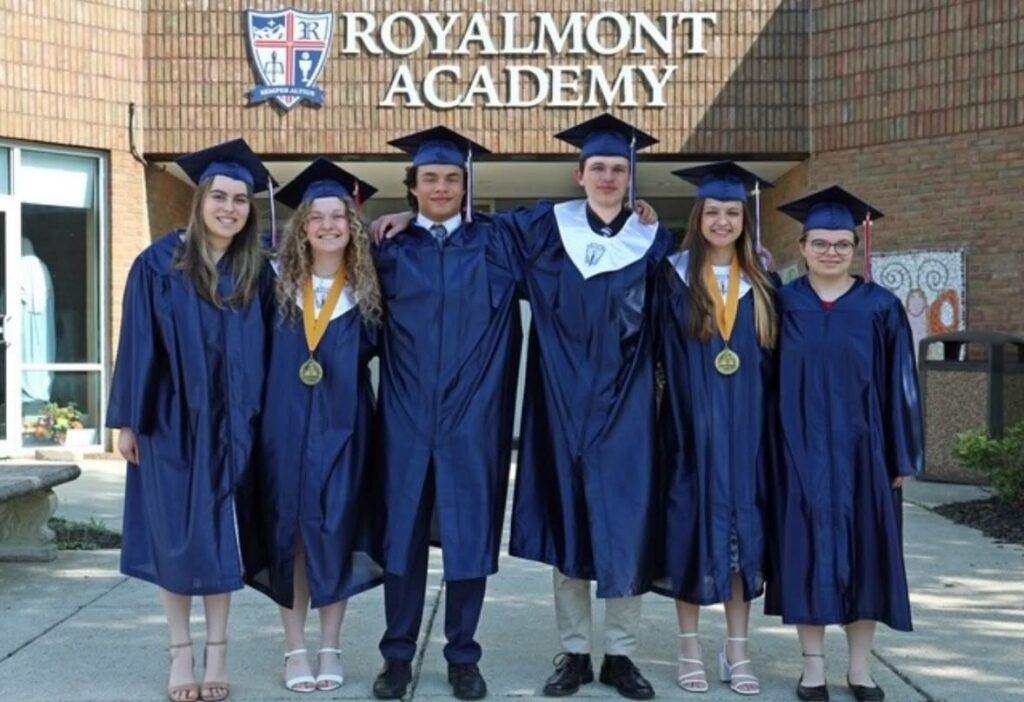 Imagine your child walking across the stage at high school graduation.
Of course, you’ll celebrate their academic accomplishments, friendships, and experiences.
But what else do you hope to see?
Perhaps a young adult who understands their strengths, communicates with confidence, takes responsibility, and treats others with dignity. Someone who can face challenges, make sound decisions, and recognize opportunities to serve.
Most importantly, someone who has begun discovering who God created them to be.
That’s ultimately how we should evaluate a high school education.
Royalmont senior Bella Polly offers a powerful reflection on her own experience:
“Royalmont Academy helped shape me into the person my younger self would be surprised by.”
Her words capture something that a course catalog or list of extracurricular activities cannot fully explain.
Real education changes people.
Another senior, Anna Brink, describes her growth this way:
“Royalmont has shaped me into who I am today: a leader, a strong Catholic, and a well-rounded person.”
Every student’s journey will look different. Nevertheless, helping students discover their gifts, grow in character, develop meaningful relationships, and prepare for their calling remains at the heart of Royalmont’s mission.
Ask when visiting: What kind of person does this school hope my child will become, and how does the school help make that growth possible?
Choosing a High School Is About More Than the Next Four Years
There are excellent high schools throughout Greater Cincinnati. Each offers different strengths, opportunities, and experiences.
Some families will prioritize athletics or extensive extracurricular options. Others will focus on a particular academic program, school tradition, or learning environment.
Those considerations matter, and no single school will be the right fit for every student.
However, we encourage families to look beyond what a school offers and consider what its students actually experience.
Are students known personally? Do they have opportunities to contribute and lead? Are they developing the confidence, character, and skills to navigate life beyond graduation?
At Royalmont Academy in Mason, Ohio, we’re building a high school experience around a clear purpose: forming strong Christian leaders who are prepared for life.
Through individual accompaniment, academic challenge, meaningful relationships, leadership experiences, and Integral Formation, we want to help every student recognize their potential and prepare for the opportunities ahead.
As our high school continues to grow, we’re also investing in dedicated learning spaces and exploring additional educational pathways to better serve students with different interests and aspirations.
Because ultimately, success isn’t defined by attending a particular college, choosing a certain profession, or following someone else’s path.
It’s about becoming the person God created you to be and developing the ability to make a meaningful difference in the world.
Experience Royalmont High School for Yourself
The best way to understand a school is to experience it.
Join us for our High School Open House on Thursday, November 12, from 5:00–7:00 PM.
Meet our students and faculty, explore our academic and leadership opportunities, and discover how Royalmont Academy prepares students for life, wherever their path takes them.
Discover the Royalmont Academy Difference
Imagine a school where students are known, formed, and prepared to lead — not just for college, but for life. At Royalmont Academy, we nurture academic excellence, leadership, and faith at every stage, from preschool through high school. Request information, schedule a visit, or begin your journey with us today.