Blog


Questions to Ask on a School Tour: Parent Guide
Parents often ask what questions to ask on a school tour before choosing a new school. A tour should help you understand more than the building, class sizes, or course list. It should reveal how the school will know, challenge, support, and form your child.
The best school tour questions explore academics, relationships, student culture, communication, faith, and leadership development. They also help you compare what schools actually do rather than relying on broad promises.
A good school tour should show you who your child could become within that school community.
Questions to Ask on a School Tour
Bring a written list of questions so you can evaluate each school consistently. However, do not focus only on prepared answers. Ask for examples that show how the school’s philosophy affects students each day.
1. How will teachers get to know my child?
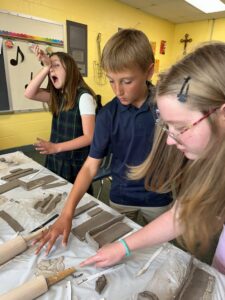 Many schools promise individual attention. Ask what that looks like when teachers plan lessons, respond to difficulties, or recognize a student’s strengths.
At Royalmont Academy, personalized accompaniment means teachers seek to understand each student’s needs, abilities, goals, and opportunities for growth. Small classes support that work, but the deeper difference is the intention behind the relationship.
2. What happens when a student struggles academically?
Ask who notices the problem, how quickly the school responds, and how parents become involved. Also ask whether support happens during the school day or depends entirely on tutoring outside school.
A strong answer should include specific systems for identifying gaps, providing additional instruction, and tracking improvement. The response should not simply place responsibility on the student or family.
3. How do you challenge students who are already doing well?
A student can earn good grades without reaching full potential. Ask how teachers deepen learning for students who understand material quickly or show advanced ability.
Look for opportunities involving discussion, leadership, problem-solving, independent work, creativity, and authentic application. Challenge should mean more than assigning extra worksheets.
4. How do teachers communicate with parents?
Ask how often families receive academic updates and whom they should contact with concerns. You should also understand how the school handles communication before a small issue becomes a larger problem.
Healthy school partnerships require clarity from both parents and educators. The school should welcome appropriate questions while maintaining professional processes for resolving concerns.
5. How do you develop character and leadership?
 Many schools talk about producing leaders. Ask how students practice leadership before graduation and how the school teaches responsibility, perseverance, service, communication, and sound judgment.
Royalmont forms Christian leaders through four dimensions of Integral Formation: intellectual, human, spiritual, and apostolic. Students are not prepared only to achieve. They are formed to use their abilities in service to God and others.
6. How is faith integrated into the school day?
In a Catholic school, faith should shape more than religion class and weekly Mass. Ask how Catholic teaching influences classroom discussion, relationships, discipline, service, and the school’s understanding of the human person.
At Royalmont, faith and academics are not separate programs. Catholic truth provides the foundation for how students understand knowledge, freedom, virtue, leadership, and their purpose in life.
7. How do you welcome new students?
If you are considering a switch, ask what the first several weeks would look like for your child. Find out how teachers monitor academic adjustment, friendship development, and emotional well-being.
Ask whether your child can shadow a current student before enrolling. A shadow day often reveals more about daily life than a traditional campus tour alone.
8. What opportunities will my child have to participate?
Large schools may offer more programs, but access can be highly competitive. Smaller schools may provide more opportunities for students to play sports, perform, lead, serve, and try something new.
Ask how many students actually participate rather than simply reviewing a list of activities. Opportunity matters only when your child can meaningfully access it.
What Should Parents Notice During a School Tour?
Pay attention to what happens outside the formal presentation. Notice whether students greet adults, whether teachers know students by name, and whether classrooms feel both orderly and engaged.
Watch how students interact with one another. A school’s culture often appears in hallways, transitions, lunch periods, and unscripted conversations.
Also notice whether your guide asks about your child. A tour should not feel like the same presentation given to every family. The school should want to understand why you are exploring options and what your child needs next.
Questions Schools May Not Expect You to Ask
Parents should feel comfortable asking direct questions. Honest schools should be willing to discuss both their strengths and the areas they continue working to improve.
- Why do families most often choose to leave?
- What is one area your school is actively improving?
- How do you respond to bullying or repeated unkindness?
- How do you address inconsistent academic performance?
- How does the school handle conflict between parents and teachers?
- What kind of student is most likely to thrive here?
The quality of the response matters as much as the information itself. Look for openness, specificity, and evidence of accountability.
How Should I Compare Different Schools?
After each visit, record your impressions while they remain fresh. Compare schools in several areas rather than allowing one attractive feature to determine the decision.
- Academic support: Will my child be both challenged and supported?
- Relationships: Will teachers truly know my child?
- Culture: Do students appear respectful, confident, and engaged?
- Faith: Is Catholic identity visible throughout daily life?
- Leadership: Will my child have meaningful opportunities to grow and contribute?
- Communication: Will we understand how our child is progressing?
As you compare schools, consider whether your child is merely performing well or truly flourishing. Our guide on how to know if your child is thriving in school can help you evaluate that distinction.
Why Would a Parent Choose Royalmont?
Parents often choose Royalmont because they want more than strong academics or a Catholic environment. They want their child to be personally known, intentionally formed, and given real opportunities to lead.
Royalmont combines the Catholic Intellectual Tradition with modern pedagogy, personalized accompaniment, leadership development, and practical preparation for adulthood. Students grow intellectually, humanly, spiritually, and apostolically rather than being measured by academic performance alone.
If you are deciding between public school, homeschool, a classical academy, or another Catholic school, ask what may be missing from each option. Royalmont offers the personal attention of a smaller community while providing the structure, relationships, sacramental life, activities, and leadership experiences of a full PK–12 school.
Common Questions Parents Ask
What questions should I ask on a school tour?
Ask how teachers know students, support academic needs, develop leadership, communicate with parents, and build school culture. You should also ask how faith or values shape daily decisions.
What should I look for during a school tour?
Observe student engagement, teacher relationships, classroom order, and interactions in common spaces. Pay attention to whether the school seems genuinely interested in understanding your child.
Should my child attend the school tour?
Older students should usually participate in at least part of the visit. A shadow day can help your child experience classes, meet students, and picture daily life at the school.
Is Royalmont Academy a classical Catholic school?
Royalmont Academy offers a classically infused Catholic education grounded in the Catholic Intellectual Tradition and Regnum Christi formation. The curriculum integrates modern pedagogy while remaining faithful to Church teaching.
How do I schedule a tour at Royalmont Academy?
Families can request a personal visit through the Royalmont admissions process. During the visit, parents can tour the campus, discuss their child’s needs, and learn how Royalmont approaches faith, academics, leadership, and personal formation.
Take the Next Step
A school tour should help you make a thoughtful and confident decision. At Royalmont, we welcome direct questions because parents deserve honest answers about the people and environment that will influence their children.
Schedule a personal visit to Royalmont Academy and bring your questions with you. We would be glad to learn more about your child and help you determine whether Royalmont is the right fit for your family.
Discover the Royalmont Academy Difference
Imagine a school where students are known, formed, and prepared to lead — not just for college, but for life. At Royalmont Academy, we nurture academic excellence, leadership, and faith at every stage, from preschool through high school. Request information, schedule a visit, or begin your journey with us today.