
Adolescence is a vulnerable window for belief
- 48%of those who leave Catholicism say they did so before age 18 (Pew, “Faith in Flux”). Source: Pew Research
- Early teensare frequently the starting point of drift (moving away from their Christian faith) —long before college—highlighting the stakes of high school formation. Details
- Formation matters | Students need integrated, credible answers—about God, science, suffering, and meaning—to stay rooted. Magis / Essential Modules
Catholic schooling helps—when it’s consistent and deep
Studies associate sustained Catholic high school attendance with stronger adult Catholic identity and lower risk of disaffiliation. The advantage is real—but not automatic. It depends on quality, coherent formation that addresses mind, heart, and community. See summaries and research overviews via diocesan and academic sources: Catholic school impact overview, Catholic identity & formation review.
How Royalmont does faith formation right
1) Faith–reason integration with credible apologetics
We equip students to face the big questions of our age. Using resources like Fr. Robert Spitzer’s Essential Modules (Magis Center), we address evidence for God and the soul, the Resurrection, why be Catholic, true happiness, and the problem of suffering. Students learn that belief is not blind—it’s reasonable and life-giving.
2) Formation woven through the curriculum
- Science: wonder, order, and intelligibility complement belief rather than compete with it.
- Humanities: dignity, virtue, vocation, and moral reasoning animate texts and history.
- Service & leadership: apostolic projects turn learning into love of neighbor.
3) A meaningful sacramental life
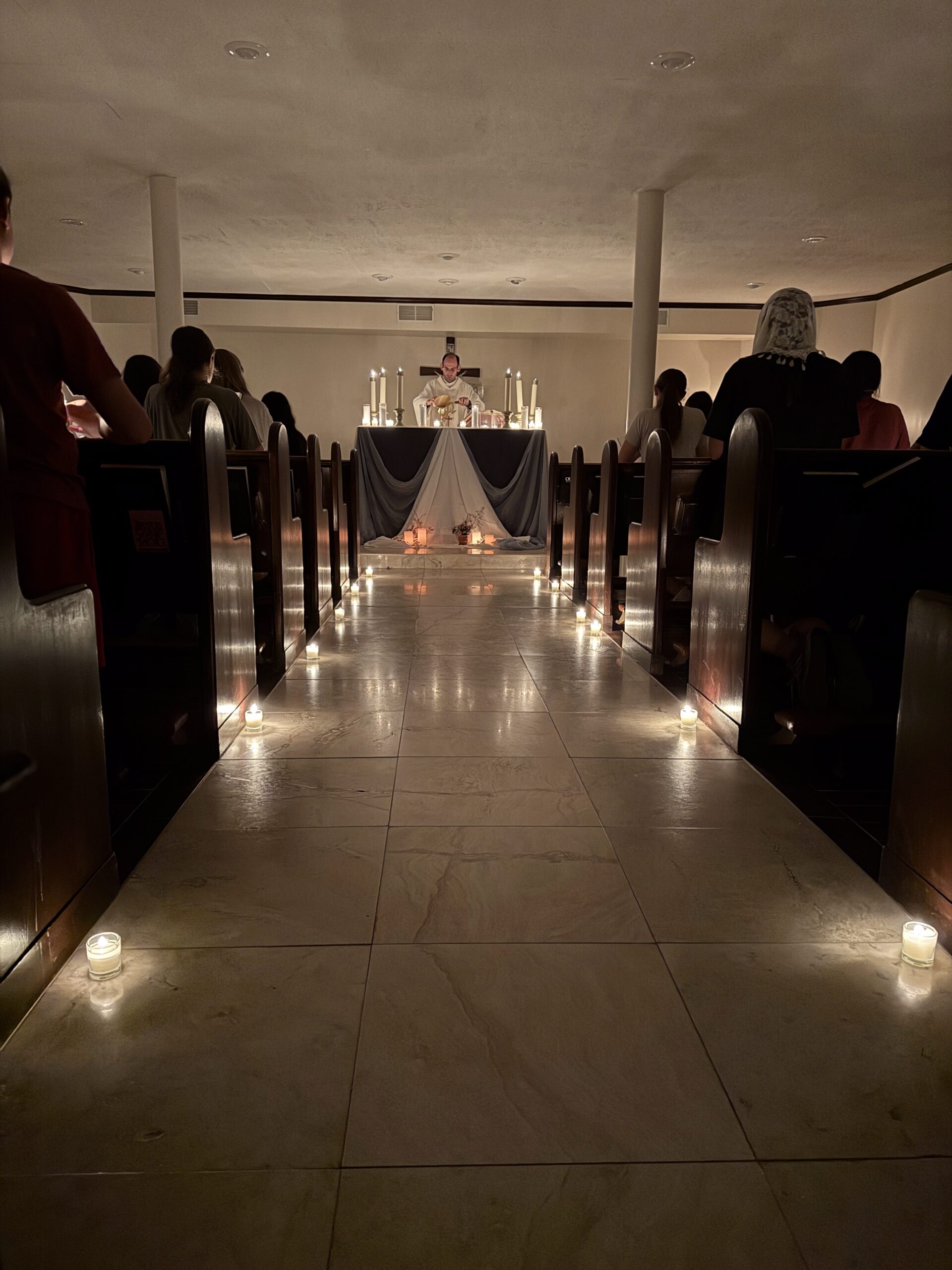
Frequent Mass, Confession, Eucharistic adoration, and age-appropriate retreats—each designed to meet students where they are and invite them deeper. Spiritual practices aren’t add-ons; they’re the atmosphere.
4) Faculty formation & witness
Teachers are formed to be credible witnesses who integrate faith naturally in their disciplines. Students don’t just hear about faith—they see it modeled by mentors who love truth, goodness, and beauty.
5) Personal accompaniment
Every student has trusted adults who walk with them—creating safe space for doubts and discernment, and building the habits that sustain faith beyond graduation.
What this means for your family
With intentional, integral formation, students grow from “inherited” faith to personal conviction. They learn to pray, think, love, and lead as Christians—in college, in careers, and in the Church.
See Royalmont in action
Experience a day at Royalmont—sit in on classes, talk with faculty, and meet student leaders. You’ll see the difference formation makes.
Or explore: Best Catholic High School in Warren County
Frequently asked questions
Isn’t faith ultimately a gift?
Yes—and gifts thrive with care. Our role is to invite, equip, and accompany students so grace finds fertile ground.
My child had strong middle school formation. Isn’t that enough?
High school brings new pressures and intellectual challenges. Formation must deepen and integrate across disciplines to remain compelling during these years.
Do you address science and hard questions directly?
Absolutely. We welcome questions and give students the best of Catholic intellectual life, including faith–science dialogue through resources like the Magis Center’s modules.
Research & sources
- Pew Research Center, Faith in Flux (2009): Disaffiliation timing & reasons
- Overview of Catholic schooling’s impact on adult faith: Catholic Voice summary with studies
- Academic reviews on Catholic school identity & formation: ERIC/education journals
- Fr. Robert Spitzer / Magis Center: Essential Modules (Credible Catholic)